
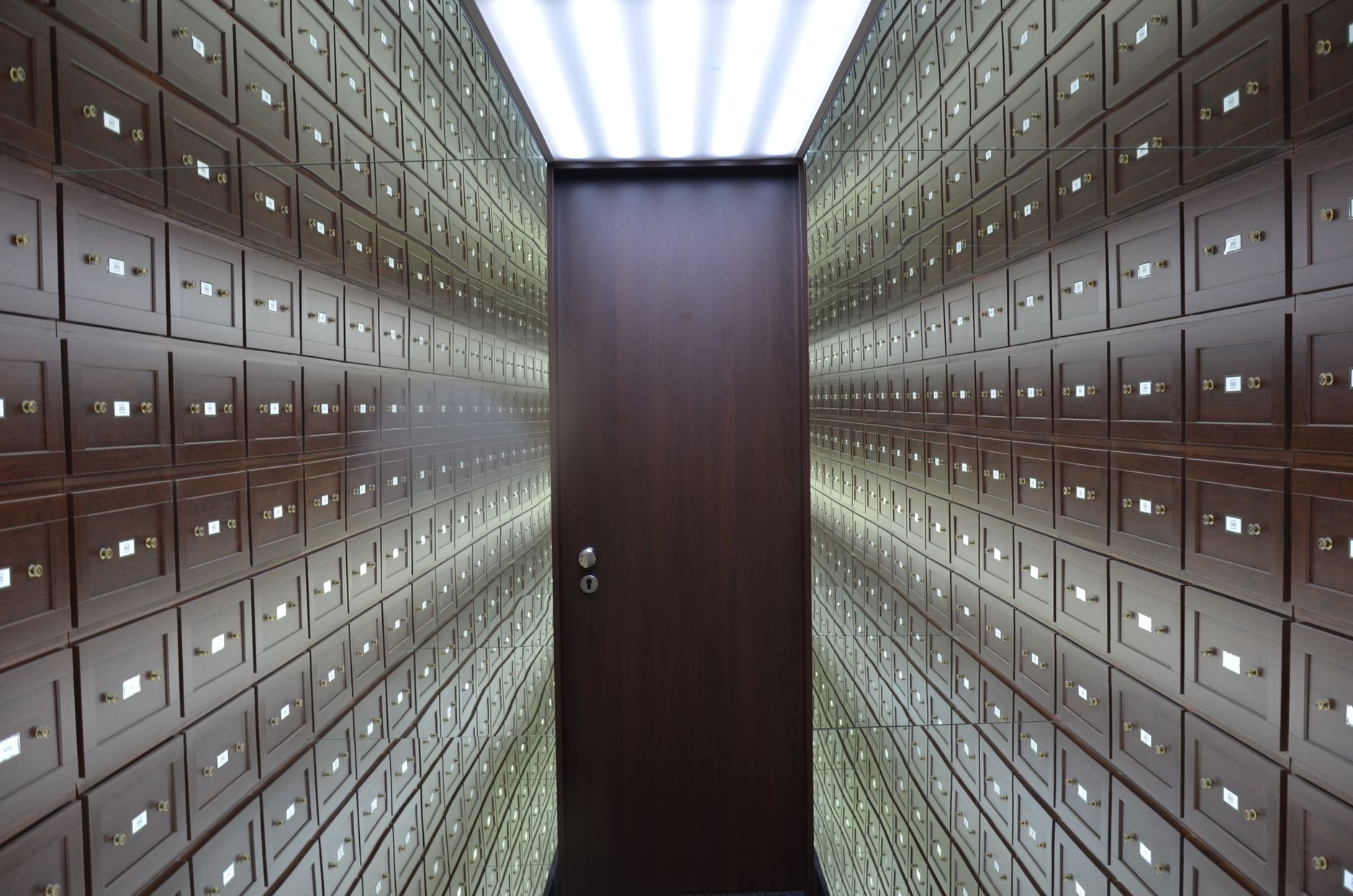
A joint safe deposit box sits quietly in a bank vault, rarely thought about until a relationship ends. Then it becomes a serious problem. Both account holders retain full access until the box is formally dealt with, which means either party can walk in and remove the entire contents without the other's knowledge. If you've recently separated, understanding exactly what's at stake and what to do next matters more than most people realise.
Why a joint safe deposit box is a high-risk asset at separation
Unlike a joint bank account, a safe deposit box holds physical items. Banks don't record what goes in or comes out. There's no transaction history, no audit trail, and no automatic freeze triggered by a separation. If your former spouse accesses the box and removes cash, jewellery, share certificates, or title deeds, proving what was there becomes your problem.
The contents of a safe deposit box typically form part of the property pool in a settlement. That means anything removed unilaterally before a formal agreement is reached could distort the division of assets. Courts take a dim view of this kind of conduct. Still, the practical challenge is that you need to act before removal happens, not after.
Your first step: document everything
If you still have access to the box and the situation is safe to do so, visit the bank branch and take a full inventory of the contents as soon as possible. Bring a witness if the bank permits it. Photograph or video everything inside. Keep dated records.
Include in your inventory:
- Cash amounts (note the denominations)
- Jewellery and watches, with descriptions and any certificates of authenticity
- Title deeds, share certificates, and any financial instruments
- Insurance documents or policies
- Passports, birth certificates, and personal identity documents
- A copy of any will or binding financial agreement held there
Send yourself a timestamped email with the photos and inventory list. Store a backup copy with your solicitor or a trusted third party.
Can you freeze access to a joint safe deposit box?
This is where things get complicated. Most Australian banks do not have a straightforward process for unilaterally restricting a co-holder's access based on a relationship breakdown. The box was opened by mutual consent, and each holder's rights remain equal until the bank receives a court order or a signed agreement from both parties.
Contact the bank immediately. Ask them what process they follow when co-holders dispute access. Some institutions will flag the account for dual-key access, meaning both parties must be present simultaneously to open the box. Not all banks offer this, but it's worth requesting. Get the bank's response in writing.
If the bank won't cooperate and you have genuine concerns about removal of assets, your family lawyer can apply for an injunction through the Federal Circuit and Family Court of Australia to restrict access. This is an urgent remedy and should be sought quickly if the risk is real.
What to do with the contents during settlement
Physical items in a safe deposit box don't divide themselves the way a bank balance does. Some items, like a grandmother's ring or a specific document, can't be split in half. The contents need to be addressed as part of the broader asset pool.
For valuable physical items, independent valuation is the cleanest approach. A licensed valuer can assess jewellery, coins, bullion, and collectibles. Their report becomes part of the financial disclosure each party is required to provide. The Family Law Act 1975 requires full and frank financial disclosure from both parties, and that obligation extends to the contents of a safe deposit box.
Personal documents, such as passports and birth certificates, should be returned to the relevant person promptly. Holding these as leverage is not permitted and can be addressed by court order if necessary.
Once the contents have been inventoried, valued, and agreed upon, they can be allocated between the parties as part of the settlement. If you're working through how the broader division of belongings fits together, the article on how to divide personal property and household contents after separation covers the broader framework in detail.
Closing the box: the practical steps
Once settlement is finalised, the box itself needs to be formally closed or transferred to a sole holder. This requires both parties to attend the bank branch together, or for one party to provide written authority (usually witnessed or notarised) allowing the other to act alone. The bank will have its own process and will want to verify identity for both holders before closure.
If your settlement is formalised through consent orders or a binding financial agreement, bring a copy to the branch. Some banks require a certified copy. Call ahead and ask exactly which documents they need so the visit doesn't stall on a technicality.
Return both keys. If a key is lost, the bank will arrange for the box to be drilled open by a locksmith, and you'll pay the cost. This typically runs between $200 and $600 depending on the institution and box type.
What if your former partner refuses to cooperate?
Uncooperative behaviour around a safe deposit box is treated the same way courts treat uncooperative behaviour around any shared asset. If your former partner refuses to attend the branch, removes contents without agreement, or denies access to the box during settlement proceedings, document every attempt to resolve the matter and raise it with your solicitor.
Your lawyer can write to the other party formally requesting cooperation, or seek orders from the court if negotiation fails. Non-disclosure of box contents during financial disclosure proceedings is a serious matter and can affect how the court weighs the overall settlement.
If there is a joint tax debt connected to items held in the box, such as undeclared income or assets, that issue has its own legal dimension. The article on how to handle a joint tax debt after separation covers what both parties remain liable for once a relationship ends.
Don't leave it until settlement is finalised
The single biggest mistake people make with a joint safe deposit box is treating it as a low-priority item to sort out later. By the time settlement negotiations conclude, months or years may have passed. Contents can be removed, documents lost, and valuables disputed with no record to fall back on. Act early, document thoroughly, and get legal advice if there's any risk the other party will act unilaterally.
Rockwell Family Law Services assists clients at every stage of financial separation, including disputes over physical assets and urgent applications to protect property. Contact Rockwell Family Law Services to discuss your situation with an experienced family lawyer.